Wine, Spirits & Cigars
Celebrate the Jubilee in style with a bottle of Premium Graham’s 1952 Port from Berry Bros & Rudd
To celebrate the Queen’s diamond Jubilee, 300 year old vintners to the Queen, Berry Bros & Rudd are selling a premium Graham’s 1952 port. Read more
The Four Seasons Hotel London releases Louis XIII £10,000 Diamond Jubilee Cocktail
The Diamond Jubilee Fizz is a delicious blend of Louis XIII cognac, raspberry liqueur and rose essence, and is of course topped up with the finest Louis Roederer Cristal Champagne. Read more
Discover your personal taste in cocktails with TASTE BY APPOINTMENT from GREY GOOSE®
Every person has a unique taste profile, with a different reaction to each of the five elements of taste: sweet, sour, bitter, salty and umami Read more
£100,000 Diamond Jubilee Blended Scotch Whisky by John Walker & Sons
In order as to mark The Queen’s Diamond Jubilee in 2012, John Walker & Sons, Scotch Whisky Distillers By Appointment to Her Majesty The Queen, has created Diamond Jubilee Blended Scotch Whisky by John Walker & Sons, a unique blend of grain and malt whiskies all distilled in and maturing since 1952, finished in a marrying cask of English oak from The Queen’s Sandringham Estate.
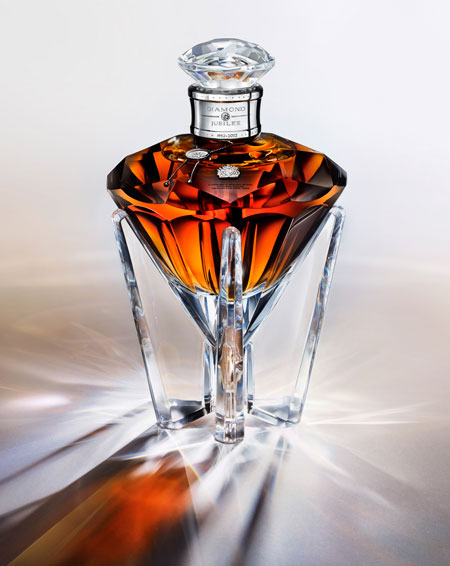 Just 60 of these rare editions, one for each year of The Queen’s reign, will be offered for sale at £100,000 each. John Walker & Sons will donate the profits from the sale, with a guarantee of at least £1million, to Queen Elizabeth Scholarship Trust (QEST), the charitable arm of the Royal Warrant Holders Association that preserves rare craft and conservation skills and enables them to flourish.
Master Blender Jim Beveridge and his apprentice Matthew Crow explored vast stocks of Scotch Whisky to seek out some of the most exceptional casks of whiskies distilled in 1952, the year The Queen acceded to the throne, to craft the exquisite liquid. Jim drew on expertise gained over more than 30 years and inspiration from the Walker family blending notes to create this peerless blend with a unique sense of provenance.
The Diamond Jubilee marrying casks are the final project by Master Cooper David Taylor, working with his journeymen tutors and apprentices, as he retires after 42 years as a John Walker & Sons cooper. Sandringham oak, provided by kind permission of The Queen, has been cut and carved into staves, shaped by hand and jointed seamlessly using age-old techniques to create the two small casks.
Resting at Royal Lochnagar Distillery, on the edge of The Queen’s Balmoral Estate, the marrying casks will be observed closely through this traditional finishing process, which allows the flavours to combine gradually, before bottling on 6 February 2012, 60 years to the day since The Queen acceded to the throne. John Walker & Sons has brought together fellow Royal Warrant Holders, QEST Scholars and leading artisans to present the whisky. Baccarat, the ultimate reference in luxury crystal, is making the diamond-shaped decanters, which stand on a base of six radial legs to reflect each decade of The Queen’s enduring reign. They will be decorated with Britannia silver adornments, including the John Walker & Sons Royal Warrant, entwined JW&S monogram and a collar that features a half-carat diamond, by Scottish silversmiths Hamilton & Inches. The silver will be hallmarked with the commemorative Diamond Jubilee mark.
Each decanter will be accompanied by a pair of specially designed lead crystal glasses by Cumbria Crystal, engraved by Philip Lawson Johnston with wildlife scenes from The Queen’s Balmoral and Sandringham Estates. QEST Scholar Laura West will create a hand-bound artefact book telling the story of craftsmanship behind Diamond Jubilee by John Walker & Sons, personalised with the name of each owner by QEST Scholar and Calligrapher By Appointment to Her Majesty The Queen, Sally Mangum.
All these elements will be housed in a bespoke cabinet by N.E.J. Stevenson, incorporating oak and native Caledonian pine from The Queen’s Sandringham and Balmoral Estates and decorated with fine marquetry using timber veneers from around the Commonwealth.
Just 60 editions will be created and released for sale to raise funds for the QEST Diamond Jubilee Appeal, to support its mission to preserve traditional craftsmanship as symbolised by the Royal Warrant of Appointment.
Due to the very exclusive nature of such an item it is hardly the kind of product that it widely publicised, and more-over, it is certainly not that the kind of product that anyone can simply buy over the counter. Anyhow, given our unique very select membership, we were very fortunate as to be provided with a direct email contact for anyone interested in purchasing of these highly desirable pieces of history …CLICK HERE to reveal further details.
The eternal pursuit of perfection in the art that is Japanese Whisky
When it comes to supercars there is no shadow of a doubt that this is an area where the Italians reign supreme, however, conversely when it comes to whisky, especially that of single or blended malts, this is evidently a territory where the Scots bestow the honours. Well, at least the latter had been my conception until recently savouring the delights of Japanese whisky, namely the Suntory brand.
“Every once in a while there are those rare occurrences that really upturn previously held beliefs and rewrite the rule book, well my first experience of Japanese whisky certainly proved to be just such an occasion.”
The Art of Japanese Whisky
In a way that seemingly only the Japanese know how, anchored in their eternal pursuit of perfection, they have seemingly managed to turn the whisky making process in to an art form. In fact, established in 1923 by Suntory founder Shinjiro Torii, Japan’s first and oldest distillery Yamazaki was purposely built in the periphery of Kyoto, a region famed for having the purest waters in Japan. Inspired by Scottish whisky, Torii understood that it would be the unique terrain and climate of Japan that would distinguish his whiskies, so from utilising the most sacred of waters, to introducing ‘Mizunara,’ a Japanese oak in construction of his casks, he scrupulously ensured that every stage of the process remained true to the delicate harmonies that lie between Japanese nature and its people.
Distinctive and unique
What I find most fascinating, is that the Japanese artisans have not copied Scotch, but rather embraced Scottish practices to develop an entirely new smoother and more rounded whisky, quite unlike anything else the world over. Of added interest, is the way in which they serve it; whilst connoisseurs may continue to insist on drinking it neat, it is actually common practice in Japan to either serve with plenty of ice, a splash of (warm or cold) water, or even diluted with soda water. Whilst particularly the latter may sound somewhat detrimental, it is however worth noting, that as a comparison, in England it has become common to dilute whisky with such insults as lemonade or worst still Coca Cola.
So in many respects the Japanese traits actually pay homage to the purity of the whisky, whilst making it more drinkable over perhaps lunch, or appealing to the typically lighter taste palates of the fairer sex.
Global industry accolades
Suntory whiskies have garnered over 60 awards in the last eight years. Most recently Yamazaki 1984 single malt was named Best Malt Whisky in the World 2010, while Hibiki 21 year old was named Best Blended Whisky in the World 2010. Also in 2010 Suntory was named Distiller of the Year, the first time this accolade had been given to a Japanese distiller.
Having already won over 60 international awards for quality and excellence and quickly gaining worldwide acclaim for being one of the finest brands of whisky on the planet, it comes as no surprise that even the Scots are starting to take the competition a little more seriously, with blind tastings having caught-out even some of the most seasoned of Scottish whisky connoisseurs.
When Suntory was first established it catered solely for their own domestic market. Nowadays they currently export to over 25 different countries and have been accepted with such outstanding praise that they are currently having difficulty in meeting the international demand.
Listen to the experts
Anyway with regard to taste I simply do not have the editorial space nor the necessary thesaurus of superlatives to afford Suntory the honours they deserve.
But don’t take my word for it. Read these comments from experts who know whisky:
Luca Cordiglieri, Bar Manager of China Tang at The Dorchester:
“Yamazaki is a good sipping whisky but is also a great base for a cocktail”.
Robert Gaggl, Bar Manager of Devigne Bar at The Mandeville Hotel:
“ …the Japanese approach to whisky-making has resulted in outstanding whiskies which have successfully taken on the world”.
Pedro Solorzano, Bar Manager of Hush Bar:
“Hibiki 17 year old is the perfect blend. The best way to savour the aromas and flavours of Japanese whisky is to drink it neat”.
Dave Broom, whisky connoisseur and judge at the Whisky Magazine Awards 2011:
“(Of the Hibiki 21 year old blended whisky)…Who can beat it? This is a well deserved win”
“(Of the Yamazaki 1984 single malt)…This whisky is all-conquering. A remarkable result in a very competitive category”.
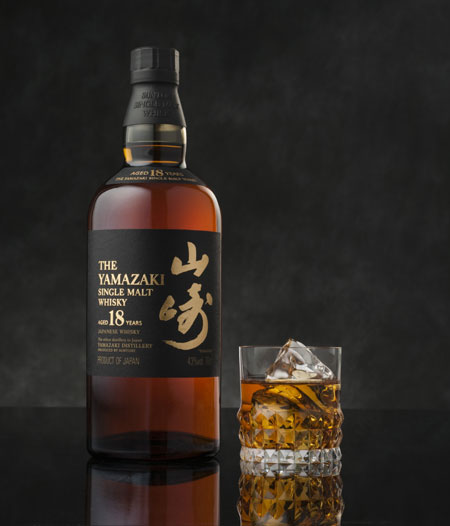 My only command is that next time you order a drink, make it a Suntory and possibly my personal favourite, the multi-award-winning full bodied malt ‘Yamazaki 18,’ which oozes with aromatic complexities spanning spicy cherry, toffee, sherry and raisins plus a chocolate and a hint of smoke.
In case of difficulty in locating Suntory whiskies simply contact the UK distributor:
Cellar Trends Limited
Tel: 01283 217703
www.cellartrends.co.uk
Fortunately for our lucky members, even if your local bar or retailer cannot cater for your cravings, we have managed to secure a free bottle of Yamazaki 18 to give away. To be in with a chance of winning a bottle, simply head over to our privileges area … Click Here!
or alternatively you can always visit our Facebook page
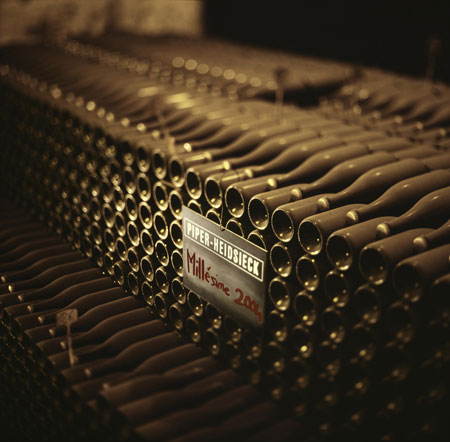
Piper-Heidsieck - The 'by word of mouth' brand of Champagne
“Piper-Heidsieck is one of those brands that you never see flaunted as a sponsor, advertised on TV, or splashed across the pages of magazines, let alone name dropped in the latest Hip-Hop or R&B singles…. and all this is for the very obvious reason that quality sells itself.”
Both Rolls Royce and Maybach are exemplary champions of this ethos. maintaining their discreet approach and never aiming to market themselves to the masses (or at least not beyond that of dreams and aspirations for most of us). For this calibre of brand, it is always a case of ‘less is more’ in terms of marketing. Piper-Heidsieck are very much party to this same mindset, and although not the common name in Bars, Clubs or Supermarket Shelves, it is frequently ‘the’ champagne of choice for those in the know, and always a firm favourite for private dining.
Also of note, whilst Louis Roederer Cristal and Moët & Chandon have had the mis-fortune of being continuously name-dropped in Hip-Hop & R&B tracks, Veuve Clicquot seem to have adorned themselves with the title of being the Polo scene’s champagne (mainly through their choice of advertising and sponsorship). The only ties that can be found with Piper-Heidsieck is its Sponsorship of Cannes Film Festival and being the champagne of choice for Marilyn Monroe and Royalty…. which is really not a bad thing for a brand in the slightest.
Whilst we have recently been honoured with the opportunity to visit the Piper-Heidsieck Vineyards in Champagne and to explore their history (and most certainly their cellars) in greater depth in the coming months, just to wet your appetite, I personally had the privilege of meeting up with Christian Holthausen, the resident expert for the House of Charles and Piper-Heidseick whilst he was in London recently, and amidst having a general chat and catch-up, ended up getting a bit carried away with a few bottles of champagne in the process.
Sometimes it is just one of those afternoons, when you fortunately don’t have much in the diary (or at least that can’t wait), there’s great weather, conversation is flowing effortlessly and you just know it will have to be a champagne affair ….well this was just such an occasion. Now when the person you are chatting with happens to also be an ambassador for Piper-Heidsieck, then you don’t just settle for a flute of house champagne, so what better way to get involved than to pop the cork on a bottle of 2002 Piper-Heidsieck Cuvée Rare. Now regardless of how seemingly insignificant an afternoon may have otherwise been, popping a bottle of fine champagne always has the instantly gratifying effect of creating an immediate sense of occasion… and nothing could sum this feeling up better than the jubilance of savouring this particular fine champagne.
To the eye, it is a relatively discreet sparkling pale gold, as to be expected, but on the nose a vivacious floral burst of honeysuckle, iris and jasmine, with notes of minerals and elegant dancing aromas of oriental fragrances such as subtle herbal teas and honey. This champagne is about as radiant and refined as they come, with feather-like delicacy that just begs one to indulge…. and that is exactly what we did.
As if we weren’t content with this extravagance alone (at a shelf RRP of £160.00 and a bar price that I daren’t mention) ….as we continued ranting away, already feeling slightly giddy with the bubbles (maybe that was just me), I started to quiz Christian about the full process of making champagne, which I would have been happy to share with you if I could remember the precise methodology, but more interestingly this did lead us to the very interesting topic of how champagne houses manage to maintain consistencies across their range and namely their standard benchmark ranges. So inevitably (almost as if I had planned it), we then obviously had to sample a bottle of the Piper-Heidsieck’s signature Cuvée Brut, which although only retailing for around £30 a bottle may seem like a backward step, actually in many respects (as their most popular champagne), it probably says more about their brand than all their Vintages put together.
Whilst I do not like to pigeonhole any products, I would instantly a liken the Cuvée Brut to that of a classic Bollinger, with those typically more fruity notes of pear and apple. When compared with the 2002 Rare, it is as if the bright fresh high notes of the champagne now have a gentle harmony accompanying them in the bass clef with a warm toastiness. The palate is lively and fresh, but with more mature notes of pineapple, nutmeg, white pepper and oriental zest.
With conversation now firmly revolving around Piper-Heidsieck, we soon moved on to the topic of Rose variants and whether it is just a pretty drink for girls and camp men, or whether there was a little more to it than that. Well, there was surely only one way to find out, so time for another bottle and this time it was the Rosé Sauvage Champagne….
As someone who hasn’t really drunk much Rosé before, I have to say that I was pleasantly surprised. It is bold and contemporary with a playfully elegant nose of fresh red fruit (notably Morello cherries). Notions of mandarin and even grapefruit combine with hints of cinnamon and figs. The palate is one of vibrant exuberant and warm with aromas of red plums, clementines and blood orange with just a touch of pistachio. The colour is obtained in accordance with the strict regulations of the Champagne region, through a significantly higher proportion of Pinot Noir vinified as red wine before being added to the blend. The magic is not complete until a further 24 months of of aging in the cellars.
Anyway, as much as one can describe a champagne by its unique taste, let us not forget about the sensation. In part derived from our mental associative with celebration and perhaps also a mixture of its luxury price tag and the fun of popping the cork, champagne always as this unique ability to seemingly conjure up that sense of occasion anytime. It never really feels as if you are drunk, but rather elegantly tipsy…. anyway, that is exactly how I felt after parting way with Christian in London’s St James Street, and what a marvelous afternoon!
Written by Sam Bryan-Merrett 24/11/11
Rum Master Tito Cordero's Diplomatico 'Ambassador Selection'
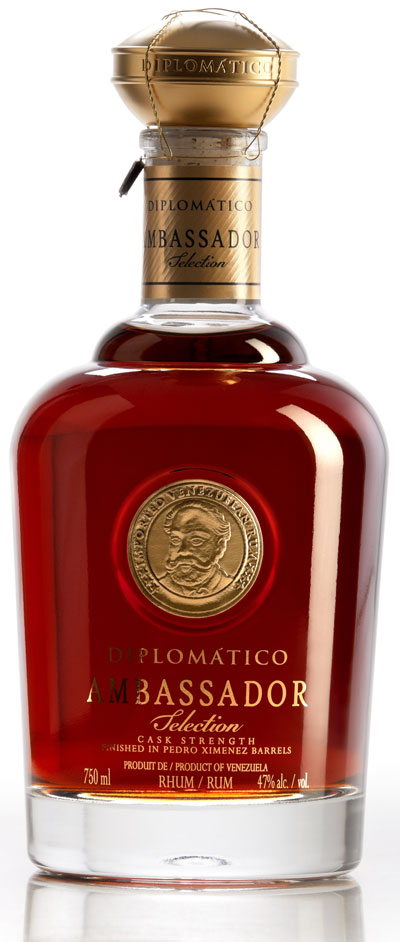 Better known by its ‘DUSA’ acronym, Destilerias Unidas S.A of Venezuela has gained recognition for its Diplomático branded rums, helped by the warmth and personality of the globetrotting Ballesteros family who are behind the brand. The distillery, which lies at the foot of the Andes Mountains in Venezuela, was established in 1959 and is one of the biggest providers of Rum in the country. The DUSA plant covers an impressive 12 hectares and produces some eight million 9-litre cases a year. With the arrival of Diplomático Ambassador Selection, DUSA are proud to see the launch of their first ever ultra premium bottling, a fine addition to the current Diplomatico range: Blanco, Anejo, Reserva and Reserva Exclusiva.
DUSA Presidente, Jose R. Ballesteros Melendez commented on the launch:
“We are immensely proud of Diplomatico and the international success that the brand is achieving. This success is a real team effort and owes much to the pride and passion of the whole team at DUSA. It was our desire to create a truly international brand and it is extremely satisfying seeing Diplomatico in the finest establishments in New York, Miami, Paris, London, Sydney and Mumbai. This success inspired us to craft and now launch Ambassador Selection our ultra premium rum that will comfortably sit alongside other great rums and spirits.”
Ambassador Selection was created by Rum Master Tito Cordero, only the 3rd Rum Master in the history of DUSA. It is crafted from 100% heavy pot still rums and aged for a minimum of 12 years, the rum is aged in ex-bourbon casks before finishing for an additional 2 years in Pedro Ximenez sherry casks. Not only does it contain no sweeteners, caramel or other additives, its high strength (47% ABV) also means it does not require chill-filtration. This ensures that fatty acids which contribute to the mouth feel and flavour are not removed during the filtration process, giving an exceptionally smooth finish. October 2011 Tito commented:
“The creation of Ambassador Selection has taken many years but we are very pleased with the new addition to our family. Our current Reserva Exclusiva is a very well loved, smooth and complex blend and we always wanted to build on this. Through the selection of barrels containing only the finest, most complex of our rums and ageing these for a further period in Pedro Ximenez sherry casks, we have not only been able to create an extremely smooth rum but also one with immense character and body. I have been working with this rum for years and even now it still brings a smile to my face”
Diplomático Ambassador Selection is officially released worldwide on the 13th October 2011. It will retail for around £200 per bottle and is available in The UK from Selfridges and The Whisky Exchange www.thewhiskyexchange.com
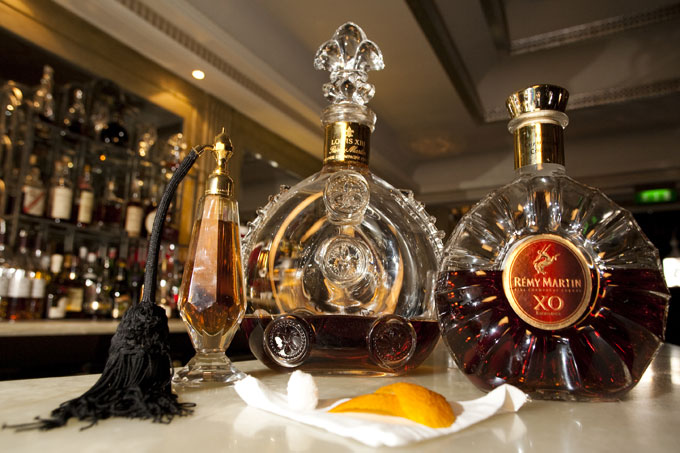
Rémy Martin XO & Louis XIII cocktail at Claridges'
“Cognac drinking has been reinvented at Claridges’ where a uniquely exclusive cocktail featuring both Rémy Martin XO and the truly exquisite Louis XIII is now available”
The Claridges bar in Mayfair has launched a new, exclusive cocktail: the “Fleur de Lis.”
First a suger cube is doused with Bitters then dissolved and mixed with the XO cognac. A twist of citrus rind follows, then the cocktail is served over ice in a tumbler glass before being lavished with a spray of century old Louis XIII cognac, to provide a truly memorable experience and one that simply has to be experienced to be believed.
It must however be pointed out that while the cognac connoisseurs amongst us may be crying out that it is sacrilege to dilute such high pedigree cognac with ice and orange rind, I must say from personal experience and against my initial reservations, that it really doesn’t so much ruin the experience, but rather provides a refreshing new one. While cognac is typically reserved as a distinguished night-cap or a reserved gentleman’s indulgence, this new slant opens cognac to new World of possibilities and potentially a new type of drinker.
 Crafted from the finest grapes in the grand champagne region of Cognac, where it is blended from more than 1,200 eaux-de-vie and aged for up to 100 years, Louis XIII, with a price tag of £250 per glass is one of the World’s most prestige cognacs in production today.
However, luckily for us, in their continued quest for perfection, the Claridges’ Bar have launched a cognac cocktail that utilises a specifically developed atomizer to delicately spray Louis XIII over the cocktail before being served. This gives the cocktail a mesmirisingly superior touch and an alluring aroma that almost beckons one to consider using it as a cologne
(or maybe that was just me).
The Fleur de Lis is currently available for £30.00 and will be served at the Claridges Bar until the end of the year.
Denis Broci, Claridges Bar Manager, uses a rare atomizer to spread Louis XIII cognac over the hotels new Fleur de Lis cocktail.
Either drop by the Claridge’s Bar to sample it yourself or for more details visit their website here: www.claridges.co.uk
Claridges’ Hotel
49 Brook Street
London
W1K 4HR
Tel: 020 7629 8860
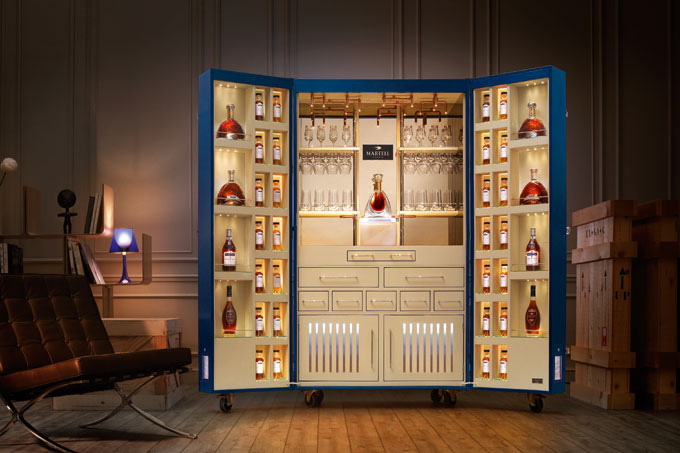
Martell launch £200k connoisseurs Cognac trunk by Pinel & Pinel
“Crafting cognac is an art in itself, but when Frédéric Pinel (Pinel & Pinel) was commissioned to design the ultimate connoisseur’s trunk for Martell cognac, the resultant creation is a statement of pure cognac indulgence”….
From the original blends in the montres to practically the entire Martell Collection, this magical trunk reveals a world of enchantment, inviting aficionados to savour the Martell cognac experience in a way that has never before even been conceivable.
Amongst the many enchanting delights that lurk behind the leather-clad doors of this handmade trunk, the one that grabbed our attention and most certainly our taste-buds (courtesy of a private tasting session at Harrods) was the truly exquisite….
L’OR DE JEAN MARTELL
L’Or de Jean Martell, consists of a complex blend of several hundred eaux-de-vie, some of which have been meticulously aged for over a century. On the nose, L’Or de Jean Martell offers a vibrant fruity harmony of citrus notes, orange peel and blackcurrants, with aromas of gingerbread where clove and cinnamon are subtly combined with sweet vanilla. Scents of oriental forests round off this aromatic ballet with woody notes of agarwood (oudh) and myrrh, undergrowth and rancio. In the mouth, the attack is smooth yet subtle, followed-up by a more substantial opening of flavours and the the strength and structure of very old Grande Champagne eaux-devie making themselves known. The lingering finish of a “peacock’s tail” effect (found only in the greatest cognacs) makes it an unquestionably memorable experience that will savoured for life. (RRP: £2995)
A far-cry from stigma of Hop-Hop associated contemporaries Hennessy and Courvoisier, Martell has always remained the ‘Prestige Brand’ with a larger share of the XO and above market. Martell’s style has always been about elegance, complexity and balance, refined and perfected with skill and passion over the period of it’s three hundred year history.
The process of Cognac making all begins with checking the wines and tasting them in order to determine whether they are to be distilled. Cru by cru, these clear wines - which have been rid of their lees after the vinification process - undergo a first distillation, which produces a liquid known as brouillis. The brouillis itself is then distilled, a process referred to as la bonne chauffe. In keeping with an age‑old, but unwritten practice handed down through the generations, Martell retains only the best of the resulting distillate: “the heart” or coeur de chauffe. The eaux-de-vie that emerge from the still are kept for at least two years in casks of fine-grained oak, a wood that releases soft, subtle tannins. The clear liquid gradually turns into an amber elixir with a striking bouquet. The development of each eau‑de‑vie and its interaction with the wood is closely watched by the cellar master, preparing the future harmonies of the cognacs. The cognac finally emerges during blending. Year after year, each of the cognacs in Martell’s Collection is meticulously recreated by the painstaking composition of carefully selected eaux‑de‑vie: over a hundred for the Cordon Bleu and several hundred for L’Or de Jean Martell!
Out of the six crus in the cognac AOC (Appellation d’Origine Contrôlée), Martell chooses the four main ones: Grande and Petite Champagne, Fins Bois and Borderies. With 430 hectares under vines, Martell owns the biggest vineyard in the region and gives pride of place to the Borderies cru, which composes its aromatic signature. Although this cru only represents five per cent of the total Charente vineyards, it comprises one third of Martell’s domain and is the smallest of the six crus – a plateau of sandy-clay soil. It dominates the Champagne plain, and its name evokes the woods that used to border the vineyards.
Its eaux-de-vie are marked by roundness and smoothness, and by floral aromas that evolve over time towards notes of candied fruit and sweet spices.
Although the art of cognac starts in the vineyards, continues in the distilling process and then, day after day, in the warehouses, it truly culminates in the heart of the House during the final stage: the blending. This draws on the Martell reserves in the casks stored in the warehouses, or the demijohns where the eaux-de-vie patiently await their turn, sometimes for more than a hundred years 1, in a cellar called “paradise”. Each of Martell’s cognacs is the fruit of a long process during which numerous tests and pre-blends are prepared, in small, cylindrical, 20cl sample bottles known as montres. Beyond being a simple tool of the trade, the montre enables its contents
to be shared and assessed by the cellar master and his assistants.
To illustrate this stage of blending, whilst exacerbating the specificities of the four crus which make up the identity of Martell’s cognacs, to give a taste of the ineffable skill that derives from its experience, intuition and dialogue, Martell has endowed this trunk with twenty-eight montres – or seven examples of four remarkable, unique blends. Each one is a composition that is made to measure, a sensory representation of a terroir.
Sometimes just three or four exceptional eaux-de-vie suffice to bring out a cru’s taste and aroma. Consequently, each eau-de-vie has been chosen for two reasons: its potential to represent its terroir, and, together with the other eaux‑de-vie, which are measured to the closest centilitre, to create the famous Martell balance. Each of the four Exclusive Blends bears the name of its terroir, to which a figure is added. This figure corresponds to the number of vintages – some of which date back several decades – which enter the composition of the montre, bearing in mind that several eaux-de-vie from the same year may be included in the blend. As their intensities of taste differ, they are presented in the cellar master’s recommended tasting order , i.e. from the most subtle to the the most full-bodied.
“So whether intending to create your own cognac blends from the World’s Finest, sampling the entire (well…almost) Martell range, or simply impressing guests with the utmost in luxury connoisseur collections; this trunk will certainly ensure a truly memorable occasion unlike any other. Although please note that there are currently only two in circulation so you will need to have your trunk custom built to order, available exclusively through Harrods”.
Harrods Ltd
87–135 Brompton Rd
Knightsbridge
London, SW1X 7XL
United Kingdom
Tel: +44 (0)20 8479 5100 (International)
Website: www.harrods.com / www.martell.com
World's most expensive bottle of white wine
A 200 year old bottle of Bordeaux vintage has set a new world record as the most valuable bottle of white wine. It was sold in Britain on Tuesday for £75,000 ($117k).
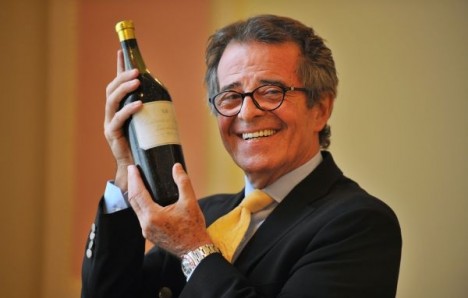 The bottle of 1811 Chateau dYquem was bought by French private collector Christian Vanneque, for his new restaurant in Bali, Indonesia. The standard-sized, 75 centilitre bottle of wine was sold at London’s Ritz hotel by rare wine specialists The Antique Wine Company. Managing director Stephen Williams praised the “legendary vintage”, one of the so-called “Comet Vintages” which takes its name from the Flaugergues Comet which passed the earth in 1811.
“Chateau dYquem is the world’s greatest white wine,” he said.
Unlike most whites which spoil after a few years, the Chateau dYquem, produced near Sauternes, in the famous wine-producing region of Bordeaux in France, has improved with maturity and could age indefinitely, the company said. Its high levels of residual sugar, combined with the grapes natural acidity, act as preservative agents which stop it becoming undrinkable, it explained.
“It has the capacity to last longer than any other white,” said Williams. Although this bottle has yet to be opened it is likely to have a “butterscotch sweetness”, he said. “We would expect it to have a creamy texture, coating the mouth with richness, and leave a sweet taste in the mouth,” he added. The wine’s value was also higher because of its status as one of the “Comet Vintages,” said the wine dealers. “The impressive value of this bottle is tied to both the quality of the wine and this historic event,” they said.
Vanneque, who has the biggest wine collection in Indonesia, said he would put the rare bottle on display at his SIP Sunset Grill in Bali when the restaurant launches in September. The record for the most expensive white wine was previously held by a 1787 Chateau d’Yquem Sauternes, which came from the same vineyard as the 1811 vintage and costs an average of $60,000 a bottle. The record for the most expensive bottle of wine sold was set in November by a rare six-litre bottle of 1947 French Cheval-Blanc, a red which sold at auction house Christie’s, in Geneva, for $304,375.
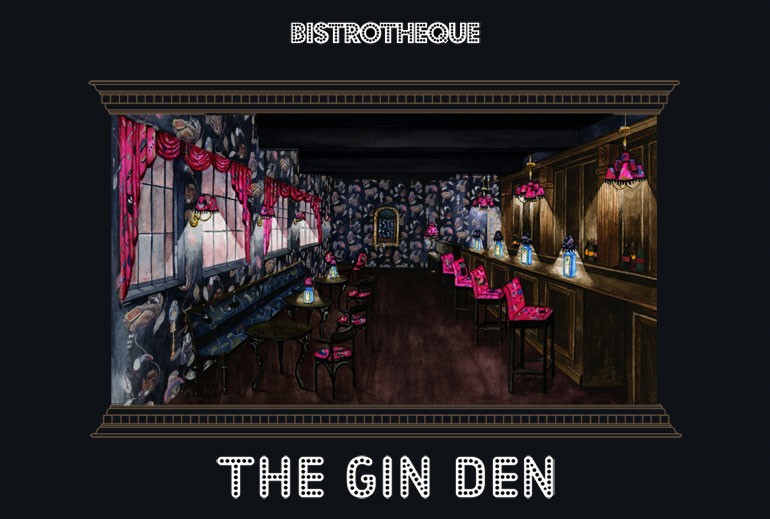
House of Hackney 'Gin Den' at Bistrotheque
House of Hackney ‘GIN DEN’ at Bistrotheque opens 28 July – 31 December 2011
(infused with imagination by BOMBAY SAPPHIRE)
Luxe homewares label House of Hackney is bringing its witty take on traditional British design to iconic East London restaurant Bistrotheque with a ʻGin Denʼ infused with imagination by iconic gin, Bombay Sapphire. Set to open on Thursday 28 July 2011, the maximalist interior is inspired by House of Hackneyʼs ʻHackney Empireʼ collection, which features a riot of colourful characters in a world where bush babies play the accordion and frogs wear bowler hats. The collaboration is a natural fit. Frieda Gormley and Javvy M. Royle, the creative and life partners behind House of Hackney, and Bistrotheque boys David Waddington and Pablo Flack are long-time friends and a key part of the East London creative scene; whilst Bombay Sapphire and House of Hackney are collaborating together on a number of upcoming creative projects. All partners in the ʻGin Denʼ are known for their innovation, breaking away from the norms of their industries and re-imagining what typical interior design, gin production or dining experiences should be. In keeping with many of Flack and Waddingtonʼs pioneering temporary dining projects, the Gin Den will be open for a limited time. Last orders will be taken at the end of the year, giving visitors plenty of time to take in the evocative décor whilst sipping a fruity and herbaceous Hackney Empire Bombay Sapphire cocktail, specially created by David Waddington and Bombay Sapphireʼs brand ambassador Sam Carter.
“We are so thrilled to be working with David and Pablo. Bistrothequeʼs atmosphere perfectly mirrors what House of Hackneyʼs is all about celebrating Britishness, creativity and the uniqueness of East London,” says Frieda. “The gin den was inspired by legendary tales of revelry in Hogarthian times which we are delighted to be bringing to life with our partners Bombay Sapphire.” The House of Hackney Gin Den at Bistrotheque is a brilliant addition to the series of unique and imaginative drinking experiences that Bombay Sapphire has created for Londoners and visitors to London.
House of Hackney Gin Den at Bistrotheque
23 Wadeson Street, London E2 9DR
www.Bistrotheque.com
www.HouseofHackney.com
www.facebook.com/bombaysapphire